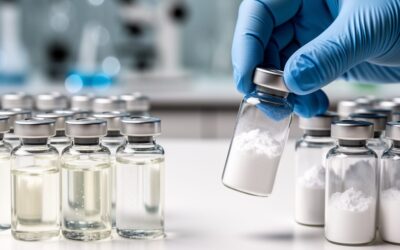

If you’re buying research peptides and not reading the Certificate of Analysis, you’re flying blind. A COA is the single document that separates a legitimate product from an expensive vial of who-knows-what. And yet, the majority of buyers either never ask for one or don’t know how to interpret the data when they get it.
This guide breaks down every section of a peptide COA, explains what the numbers actually mean, and gives you a concrete checklist for spotting fakes. No vendor shilling — just the knowledge you need to protect your research.
Key Takeaways
- A Certificate of Analysis (COA) is your only proof that a peptide matches its label for identity, purity, and contamination levels.
- Always demand third-party COAs from independent labs — in-house COAs are like grading your own homework.
- HPLC purity >98% is the minimum for research-grade peptides. Below 95% is a dealbreaker.
- Mass spectrometry confirms molecular identity — HPLC alone only measures purity, not what the peptide actually is.
- Red flags include: missing batch numbers, no lab contact info, suspiciously perfect results (99.99%), and identical COAs across different products.
What Is a Certificate of Analysis?
A Certificate of Analysis (COA) is a document issued by a laboratory that confirms the identity, purity, and quality of a chemical compound. For peptides, a proper COA should verify that the product matches the stated amino acid sequence, meets purity thresholds, and is free of dangerous contaminants like endotoxins and heavy metals.
The critical distinction is between in-house COAs and third-party COAs. An in-house COA is generated by the vendor’s own lab — which is like grading your own homework. A third-party COA comes from an independent analytical laboratory with no financial relationship to the vendor. Reputable third-party labs include Janssen Biotech, MedChemExpress, Intertek, SGS, and Eurofins Scientific.
Rule of thumb: if a vendor can’t produce a third-party COA for any product in their catalog, that’s a dealbreaker. No exceptions.
The Key Sections of a Peptide COA
1. Product Identification
The top section should clearly state:
- Peptide name — both the common name (e.g., BPC-157) and the chemical/systematic name
- Molecular formula — e.g., C62H98N16O22 for BPC-157
- Molecular weight — this should match the known MW for the peptide (BPC-157 = 1419.53 g/mol)
- CAS number — the Chemical Abstracts Service registry number. BPC-157 is 137525-51-0
- Batch/Lot number — a unique identifier for the specific production run
- Date of analysis — when the testing was performed
If any of these fields are missing, you’re looking at an incomplete COA at best — and a fabricated one at worst.
2. HPLC Purity Analysis
High-Performance Liquid Chromatography (HPLC) is the gold standard for measuring peptide purity. The HPLC section of a COA tells you what percentage of the sample is actually the target peptide versus impurities, degradation products, or synthesis byproducts.
What “good” purity looks like:
- >98% purity — research-grade standard for most peptides. This is the minimum you should accept for any serious research application.
- >99% purity — pharmaceutical-grade. Premium vendors will hit this for popular peptides like BPC-157, Ipamorelin, or Semaglutide.
- 95-97% purity — acceptable for some applications but indicates either a difficult synthesis or corners being cut. Peptides with complex sequences (long chains, disulfide bonds) may legitimately fall in this range.
- <95% purity — red flag. Either the synthesis failed, the product degraded, or the vendor is selling low-grade material. Walk away.
The HPLC chromatogram (the graph) should show a single dominant peak with minimal noise. Multiple large peaks suggest significant impurities. The retention time should be consistent with the known behavior of the peptide under the stated conditions (column type, mobile phase, gradient).
3. Mass Spectrometry (MS) Confirmation
Mass spectrometry confirms the molecular identity of the peptide. While HPLC tells you how pure the sample is, MS tells you what the sample actually is. The observed molecular weight (or m/z ratio) should match the theoretical molecular weight within an acceptable tolerance — typically ±0.1% or ±1 Da for MALDI-TOF, tighter for ESI-MS.
A COA without mass spec data is telling you the purity of something — but not confirming that “something” is actually the peptide you ordered. This is particularly important for peptides with similar molecular weights or for novel sequences where substitution errors during synthesis could go undetected by HPLC alone.
4. Amino Acid Analysis (AAA)
Amino acid analysis breaks the peptide into its constituent amino acids and measures their ratios. This confirms that the peptide has the correct sequence composition. Not all COAs include AAA — it’s more common for longer peptides or when sequence fidelity is critical. But when present, the observed ratios should closely match the theoretical composition.
5. Endotoxin Testing (LAL)
The Limulus Amebocyte Lysate (LAL) test detects bacterial endotoxins — lipopolysaccharides from gram-negative bacteria that can cause severe inflammatory responses. The FDA limit for injectable products is 5 EU/kg body weight. For research peptides, a result of <0.5 EU/mg is generally considered acceptable.
Endotoxin testing is non-negotiable for any peptide intended for parenteral research. If a vendor doesn’t test for endotoxins, they’re either cutting costs or don’t understand why it matters. Either way, find a different vendor.
6. Appearance and Solubility
Most lyophilized peptides should appear as a white to off-white powder. Yellowing, clumping, or unusual coloration can indicate degradation, oxidation, or contamination. The COA should state the observed appearance and, ideally, confirm solubility in the expected solvents (typically bacteriostatic water, sterile water, or DMSO depending on the peptide).
How to Spot a Fake COA
Fake or misleading COAs are more common than most buyers realize. A 2023 analysis by Peptide Sciences found that roughly 30% of COAs from budget vendors had discrepancies when products were independently retested. Here are the red flags:
- Generic templates — a COA that looks identical across every product in a vendor’s catalog (same layout, same font, same generic logo) with only the compound name changed. Legitimate labs produce COAs with their own standardized but unique formatting.
- Missing batch numbers — every production run should have a unique lot number. A COA without one can’t be traced to a specific batch and may be reused across shipments.
- No lab contact information — a legitimate third-party COA will include the laboratory’s name, address, phone number, and often the analyst’s name or signature. If you can’t contact the lab to verify the results, the COA is worthless.
- Suspiciously round numbers — real analytical results are messy. A purity of exactly “99.00%” or a molecular weight that matches theoretical to the decimal without any variance is unusual. Real results look like 98.73% or 1419.48 g/mol.
- No chromatogram or spectrum — a COA that states “HPLC purity: 99%” without the actual chromatogram is just a claim, not evidence. The raw data should be included or available on request.
- Date inconsistencies — a COA dated months or years before your purchase, or a COA for a batch number that doesn’t match your vial label. Fresh batches should have recent testing.
- PDF metadata — right-click the PDF and check properties. If the “author” is a generic name, the creation software is a consumer tool like Canva, or the creation date doesn’t match the stated analysis date, be suspicious.
Verification: Going Beyond the COA
The COA is your first line of defense, but it’s not the only tool available. For high-stakes research:
- Request the raw data files — legitimate labs can provide the original instrument files (.raw, .wiff, .d) for HPLC and MS analyses. These are nearly impossible to fabricate.
- Cross-reference the lab — look up the issuing laboratory independently. Do they have a website? Are they ISO 17025 accredited? Can you call them and confirm they tested that batch?
- Independent retesting — services like Janssen Labs, Vanta Bioscience, and ChromaDex offer peptide analysis for researchers who want to verify a vendor’s claims. Typical cost is $150-400 per compound for HPLC + MS.
- Community verification — forums and communities often pool resources to send vendor samples for independent testing. These crowdsourced COAs are some of the most reliable data points available.
Your COA Checklist
Before you accept any peptide for research, confirm the COA includes:
- Third-party laboratory name and contact information
- Unique batch/lot number matching your product label
- HPLC purity >98% with chromatogram included
- Mass spectrometry data confirming molecular identity
- Endotoxin (LAL) test results <0.5 EU/mg
- Analysis date within 6 months of your purchase
- Appearance description matching what you received
If a COA fails any of these checks, contact the vendor and request clarification. If they can’t provide it, find a vendor who can. In the research peptide space, quality documentation isn’t optional — it’s the entire foundation of trustworthy research.
This article is for educational and research purposes only. Always comply with local regulations regarding research compounds.