Peptides Phase II

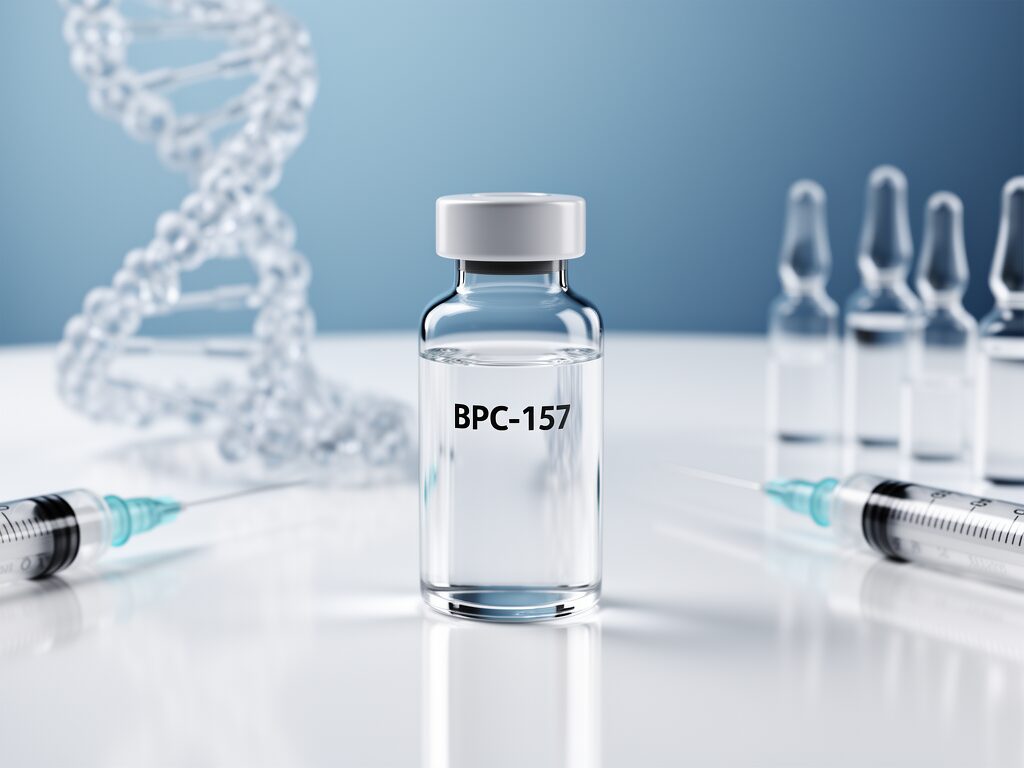
BPC-157

Also known as: Body Protection Compound-157, Pentadecapeptide, PL 14736, PL-10, Bepecin

A synthetic pentadecapeptide derived from human gastric juice, widely studied for its tissue-healing, gut-protective, and anti-inflammatory properties. One of the most popular peptides in the research and biohacking community.

Popularity A+
Class Peptide
Half-Life ~4 hours (stable in gastric juice)
Form Lyophilized powder (vial), Capsule (oral)
BPC-157 C62H98N16O22
Research-Backed User Reports Sourced Updated Mar 2026
// Overview

What is BPC-157?

BPC-157 (Body Protection Compound-157) is a synthetic pentadecapeptide — a chain of 15 amino acids — derived from a naturally occurring protein found in human gastric juice. First isolated in the early 1990s, it has become one of the most widely discussed peptides in the performance enhancement and biohacking communities.

Unlike many research compounds, BPC-157 has shown remarkable stability. It remains active in human gastric juice, does not require a carrier, and demonstrates resistance to degradation — properties that have led researchers to explore oral as well as injectable administration routes.

The compound has been studied extensively in animal models across a wide range of applications including tendon and ligament healing, gastrointestinal repair, neuroprotection, and even cardiovascular function. While human clinical trials remain limited, the breadth of preclinical data has made BPC-157 one of the most popular peptides among researchers and self-experimenters alike.

Why BPC-157 Stands Out

What makes BPC-157 unique among peptides is its versatility. Most peptides target a single pathway or receptor system. BPC-157, by contrast, appears to influence multiple healing mechanisms simultaneously — from upregulating growth hormone receptors to modulating the nitric oxide (NO) system and promoting angiogenesis (new blood vessel formation).

This multi-pathway activity may explain why user reports consistently describe benefits across such a wide range of conditions: from nagging joint injuries and gut issues to recovery from surgery and even cognitive improvements. The compound’s safety profile in animal studies has been exceptionally clean, with no reported LD50 (lethal dose) even at extremely high concentrations.

Looking for the best vendor deals?

Compare prices across 10+ peptide and anabolic vendors. Find the best quality at the lowest price.

Compare Vendors

Current Research Landscape

As of 2026, BPC-157 remains classified as a research compound. It is not FDA-approved for any medical condition, and no completed Phase III clinical trials exist. However, several Phase I and Phase II trials are underway exploring its applications in inflammatory bowel disease and tendon repair.

The majority of published research comes from a single research group at the University of Zagreb, led by Dr. Predrag Sikiric. While the consistency and volume of their positive findings is notable, the scientific community has called for independent replication studies to strengthen the evidence base.

For the self-experimentation community, BPC-157 remains one of the most commonly used peptides, with a reputation for being well-tolerated and effective — particularly for musculoskeletal injuries and gut health optimization.
// How It Works

How BPC-157 Works

BPC-157 operates through multiple interconnected pathways, which likely accounts for its broad range of reported effects.

The primary mechanism involves upregulation of growth hormone receptors in injured tissue. By increasing receptor density, BPC-157 amplifies the body's natural healing signals without directly increasing growth hormone levels — a key distinction from GH-based peptides like Ipamorelin or CJC-1295.

BPC-157 also modulates the nitric oxide (NO) system, which plays a critical role in blood vessel function, inflammation regulation, and tissue repair. It appears to normalize NO production — increasing it when levels are too low (as in ischemic tissue) and decreasing it when levels are pathologically elevated (as in inflammation).

Additionally, the peptide promotes angiogenesis — the formation of new blood vessels — which accelerates nutrient delivery to damaged tissue. This mechanism is particularly relevant for tendon and ligament injuries, which typically have poor blood supply and heal slowly.

Research also suggests BPC-157 interacts with the dopaminergic system, which may explain user reports of improved mood and cognitive function during use.

// Dosage Protocols

Dosage Information (User-Reported)

Disclaimer: Dosage information is compiled from user reports and published research. This is not medical advice. Consult a healthcare professional before use.
Protocol Dose Frequency Duration Route
Conservative / Healing 250 mcg (0.25 mg) Once daily 4-6 weeks Subcutaneous
Standard 250-500 mcg Twice daily 4-8 weeks Subcutaneous
Aggressive / Acute Injury 500-750 mcg Twice daily 2-4 weeks Subcutaneous (near injury)
Oral (Gut Health) 500 mcg Once daily (empty stomach) 4-8 weeks Oral capsule
Systemic + Local Stack 250 mcg systemic + 250 mcg local Once daily each 4-6 weeks Subcutaneous

What to Expect

Week 1

Most users report minimal noticeable effects. Some describe reduced inflammation or gut comfort within the first few days, especially at higher doses or with oral administration for GI issues.

Week 2-3

The most commonly reported window for noticeable improvements. Joint and tendon pain begins to decrease. Gut issues (bloating, discomfort) often show meaningful improvement. Some users report improved sleep quality.

Week 4-6

Peak effects for most injury-related use cases. Chronic nagging injuries that previously plateaued in recovery often show significant progress. Users frequently report improved range of motion and reduced pain during exercise.

Week 6-8

Continuation of healing. Many users begin tapering dose or cycling off. Effects tend to persist after cessation — BPC-157 does not appear to cause rebound or withdrawal effects.

Post-Cycle

Unlike hormonal compounds, BPC-157 does not require PCT. Most users report that healing gains are maintained after discontinuation. Some cycle back on after 4-8 weeks off if needed.

Common Stacks

TB-500 (Thymosin Beta-4)

Synergistic healing — TB-500 promotes cell migration while BPC-157 promotes angiogenesis

The most popular peptide stack for injuries. Run both at standard doses for 4-6 weeks.

GHK-Cu

Skin/tissue remodeling + wound healing

Often stacked for post-surgical recovery or skin healing. GHK-Cu is typically applied topically while BPC-157 is injected.

Ipamorelin + CJC-1295

Growth hormone release + tissue repair

A comprehensive recovery stack. The GH pulse from Ipamorelin/CJC complements BPC-157's receptor upregulation.

KPV

Anti-inflammatory peptide for gut health

Popular stack for IBD/IBS protocols. KPV targets mucosal inflammation while BPC-157 promotes gut lining repair.

// Preparation

Reconstitution & Storage

For injectable BPC-157, reconstitute lyophilized powder with bacteriostatic water (BAC water). Standard reconstitution:

1. Remove the plastic cap from the vial and wipe the rubber stopper with an alcohol swab.
2. Using a syringe, draw 1-2 mL of bacteriostatic water.
3. Insert the needle into the vial at an angle, letting the water run down the inside wall of the vial — do not spray directly onto the powder.
4. Gently swirl the vial until the powder is fully dissolved. Do not shake vigorously.
5. The solution should be clear and colorless. Discard if cloudy or discolored.

Common reconstitution ratio: 2 mL BAC water into a 5 mg vial yields 2.5 mg/mL (250 mcg per 0.1 mL / 10 units on an insulin syringe).

For oral BPC-157 capsules, no reconstitution is needed — take as directed on an empty stomach.

Storage: Lyophilized: room temperature (up to 2 years). Reconstituted: refrigerate at 2-8°C, use within 30 days.

Ready to source BPC-157?

Compare prices across verified vendors. Find the best purity at the lowest price.

Compare Vendors →
// Safety Profile

Side Effects & Safety

Potential Side Effects

  • ! Mild nausea (uncommon, typically with higher doses)
  • ! Dizziness or lightheadedness (rare, usually injection-site related)
  • ! Injection site redness or irritation (common, resolves quickly)
  • ! Mild headache (uncommon, more frequent in first few days)
  • ! Fatigue or drowsiness (rare)
  • ! Hot flashes or flushing (rare)

Contraindications

  • Active cancer or history of cancer (angiogenesis promotion is a theoretical concern)
  • Pregnancy or breastfeeding (insufficient safety data)
  • Concurrent use of blood thinners (theoretical interaction with NO system)
  • Known hypersensitivity to any component
  • Children under 18 (no pediatric safety data)
// Research

Published Research

// Where to Buy

Top Vendors for BPC-157

Ranked by our review scores. All vendors are independently tested.

// Related Compounds

Other Peptides Guides

Thymosin Alpha 1

A thymic peptide approved in 35+ countries that restores and enhances adaptive immunity — T-cell maturation, antiviral defense,…

Read Guide →

VIP

A master regulatory neuropeptide with broad anti-inflammatory, vasodilatory, and neuroprotective effects — critical in mold illness (CIRS) treatment…

Read Guide →

LL-37

The only human cathelicidin — a broad-spectrum antimicrobial peptide that kills pathogens, modulates inflammation, and promotes wound healing…

Read Guide →

Stay informed on BPC-157.

New research, dosage updates, and vendor deals. Straight to your inbox.

Free forever. No spam. Unsubscribe anytime.

This content is for informational and educational purposes only. BPC-157 is sold for research purposes. Never Natty does not condone or encourage the use of any substance in violation of any laws. Consult a healthcare professional before using any compound discussed on this site.